India has a magnificent heritage of textile arts. These arts still shape today’s fashion. Choosing a traditional garment means more than just wearing clothes. It’s about showing centuries of artistic growth.
Many types of embroidery in mens kurta designs make simple clothes into stylish pieces. They are perfect for any social event.
These detailed needlework techniques come from a long cultural tradition. They have been passed down through generations of skilled artisans. By wearing these historic crafts, you pay tribute to the hard work of craftsmen across the subcontinent.
Knowing the different types of embroidery in mens kurta styles helps you pick the right piece. It shows your personal style and the importance of the event.
Key Takeaways
- Indian textile arts offer a rich blend of history and modern style.
- Handcrafted needlework elevates a standard garment into a luxury item.
- Artisanal techniques vary significantly across different Indian regions.
- Choosing the right stitch pattern enhances your overall aesthetic appeal.
- These traditional crafts remain vital to contemporary fashion trends.
The Evolution of Traditional Embroidery in Menswear
Did you know the patterns on your kurta come from ancient royal courts? For ages, skilled artisans worked hard to make beautiful needlework for kings and nobles. This rich legacy has grown from royal clothes to a key part of today’s ethnic fashion.
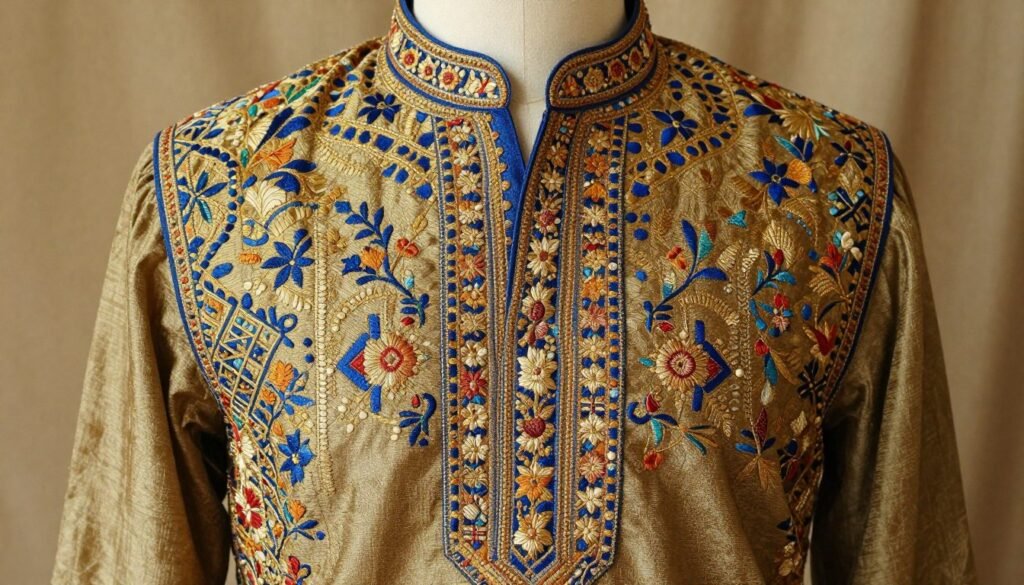
Now, the types of embroidery in mens kurta designs mix old techniques with new ideas. Designers use these old patterns to make clothes that appeal to today’s men. They make sure these ancient arts stay in our everyday clothes.
Knowing how these designs evolved shows the amazing skill in every stitch of your clothes. When you pick a piece, you’re choosing a piece of history that’s been improved over time. This link to the past makes your style deeper and more elegant.
The move towards traditional embroidery for mens kurta shows a growing love for real craftsmanship in India. As you look at different designs, you’ll see how old influences still shape men’s fashion. Using these old techniques lets you show your identity with confidence and elegance.
Understanding the Most Popular TYPES OF EMBROIDERY in mens kurta
Exploring Indian needlework can turn your ethnic clothes into art. Looking at the TYPES OF EMBROIDERY in mens kurta shows a deep history in every thread. Choosing the right design makes your outfit show your style and the garment’s cultural value.
Criteria for Selecting Embroidery Styles
When picking mens kurta embroidery styles, think about the fabric’s weight. Heavy designs need strong materials like silk or brocade. They keep the intricate work from sagging.
Lighter fabrics like cotton or linen are best with simple patterns. This keeps the garment cool and comfortable.
The event also matters in choosing embroidery. For big events like weddings, go for detailed, eye-catching designs. For everyday or casual events, simple yet elegant patterns are better.
The Role of Regional Craftsmanship in Modern Fashion
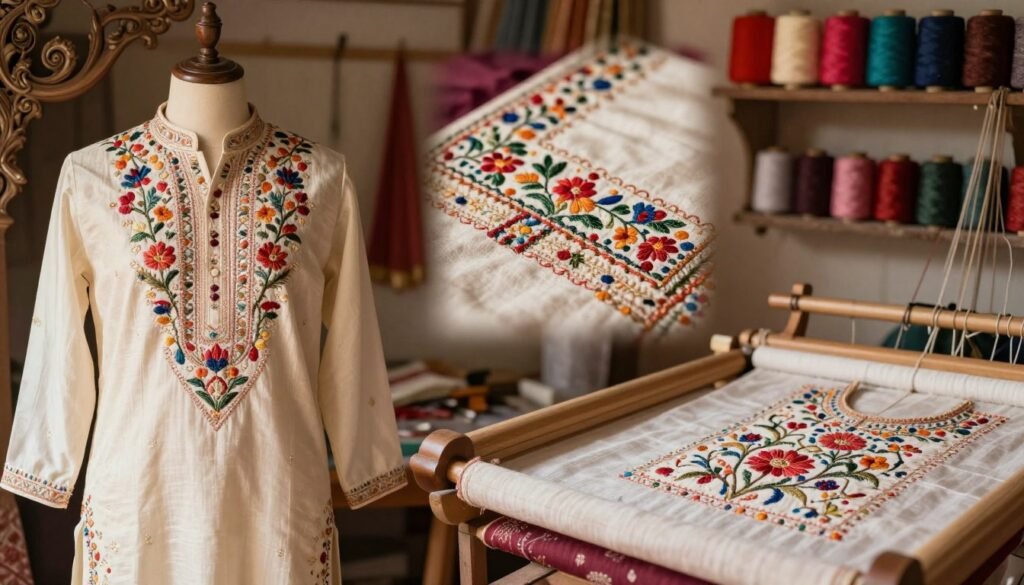
India has many popular embroidery techniques for mens kurta, each from a different place. These styles are more than just decorations. They show centuries of art passed down through generations of skilled makers.
By picking a regional style, you link your modern clothes to India’s true craftsmanship. Modern designers work with these artisans to mix old and new. This way, your clothes can be both timeless and trendy.
Chikankari: The Art of Subtle Elegance
Exploring different types of embroidery on mens kurta shows Chikankari’s timeless beauty. It comes from Lucknow and is known for its refined and understated aesthetic. This style is perfect for both day and night events.
Characteristics of Lucknowi Chikankari
Real Chikankari uses white-on-white thread work. Artisans use special stitches like Bakhiya to make beautiful flowers and paisley on fabric. This makes the fabric look nice without being too bold.
The embroidery is usually just one color. This lets the precision of the needlework shine. It’s a favorite for those who love simple yet elegant style. The patterns are so fine, the kurta feels cool even when it’s hot.
Best Fabric Pairings for Chikankari Kurtas
Choosing the right fabric is key to show off the embroidery. Soft, breathable fabrics make the stitches pop. Cotton and mulmul are top picks because they’re comfy and smooth.
For fancy events, try silk. It makes the kurta look even better. Here’s a table to help you pick the best fabric:
| Fabric Type | Best Occasion | Maintenance Level |
|---|---|---|
| Pure Cotton | Daily Ethnic Wear | Low |
| Mulmul | Summer Daytime Events | Medium |
| Chanderi Silk | Festive Gatherings | High |
Zardosi: Opulence for Festive Occasions
Zardosi turns a simple outfit into a work of art with its metallic shine. This regal technique has been a symbol of Indian luxury for ages. It’s perfect for making a statement at big celebrations. When looking at embroidery designs for mens kurta, Zardosi stands out for its formal beauty.
The History and Technique of Metal Thread Embroidery
Zardosi comes from Persian words “zar” for gold and “dozi” for embroidery. Artisans once used real gold and silver for royal clothes. Now, they use metallic threads that shine like gold and silver.
Making Zardosi is very precise and slow. Skilled workers use a special needle to weave threads into detailed designs. These embroidery designs for mens kurta often show flowers, paisley, and shapes that sparkle in the light.
Styling Zardosi for Weddings and Formal Events
Zardosi is best for weddings and big parties because it’s so fancy. Let the embroidery be the main focus by keeping your accessories simple. A well-tailored kurta with Zardosi looks great with simple pants or churidars.
Think about how your outfit looks together. If your kurta has lots of details, don’t wear too much jewelry. The right embroidery designs for mens kurta make your outfit look elegant, not too much. Confidence is your best accessory with such a rich piece.
Phulkari: Vibrant Geometric Patterns for Casual Style
Phulkari comes from Punjab and is all about bold, geometric embroidery. It’s called “flower work,” but it’s known for its eye-catching patterns. Choosing these embroidery designs for mens kurta adds energy and cultural pride to your casual look.
Understanding the Floral Motifs of Punjab
Phulkari’s beauty comes from darning stitches on the fabric’s back. Artisans make complex shapes that form big floral designs. They use bright silk threads for these patterns.
These designs often have squares, diamonds, and triangles. This makes them look balanced and modern. They look great on cotton, giving a crisp feel.
Incorporating Phulkari into Daily Ethnic Wear
Adding Phulkari to your daily wear is easy. You can choose a kurta with a small Phulkari yoke or border. This way, you get to enjoy the vibrant colors without losing comfort.
Pair your embroidered kurta with neutral pants or denim. This highlights the needlework while keeping the look modern. Here’s a table to help pick the right style:
| Style Type | Pattern Density | Best Occasion |
|---|---|---|
| Minimalist Border | Low | Office or Daily Wear |
| Yoke Embroidery | Medium | Casual Social Gatherings |
| Full Front Panel | High | Festive Casual Events |
Choosing the right level of detail makes your embroidery designs for mens kurta versatile. Whether it’s brunch or a family event, Phulkari brings a special touch to your style.
Kantha: Minimalist Texture and Heritage Appeal
Kantha comes from Bengal and adds a special touch to men’s clothes. It’s known for its understated elegance and unique way to add depth to fabrics. If you want mens kurta embroidery patterns that are subtle, Kantha is great.
The Running Stitch Technique from Bengal
Kantha uses the simple running stitch. Artisans stack fabrics and sew them together with careful rows of thread. This makes a soft, textured fabric.
The beauty of Kantha is in its meticulous craftsmanship. Each stitch is hand-done, making every piece unique. This means your clothes have a special history and care that factory-made clothes can’t match.
Why Kantha is Perfect for Summer Kurtas
For summer, you need clothes that are stylish yet comfy. Kantha embroidery is perfect because it’s light and doesn’t use heavy threads. The cotton fabric and thin stitching let air flow well.
Choosing Kantha for summer has many benefits:
- Breathability: The cotton keeps you cool all day.
- Minimalist Aesthetic: It looks great for work or casual days.
- Durability: The stitching makes the fabric strong, so your kurta lasts long.
Adding these mens kurta embroidery patterns to your wardrobe means you value quality and comfort. It’s a smart way to look sharp and stay cool in the heat.
Aari Work: Precision and Intricate Detailing
Aari work is perfect for those who want detailed ethnic clothes. It’s a top choice for popular embroidery techniques for mens kurta because of its fine patterns. It makes any outfit look better, showing off refined craftsmanship.
The Hook-Based Embroidery Process
Aari work uses a special hook called an ‘Aari.’ This hook lets the artist stitch from the underside, making a chain stitch quickly and well.
The hook stays on top, and the thread comes from below. This makes the stitching smooth and hard to do with a regular needle. It’s key for making detailed mens kurta embroidery patterns for fancy outfits.
Comparing Aari Work with Hand-Embroidery Techniques
Knowing how Aari differs from other embroidery helps judge clothes quality. Regular needlework stitches can vary, but Aari keeps the tension the same.
This evenness lets for detailed designs like small flowers or patterns that look perfect. While other methods are lovely, Aari is top for popular embroidery techniques for mens kurta. It’s durable yet stylish.
Mirror Work: Adding a Festive Spark to Your Kurta
Shisha embroidery, also known as mirror work, turns a simple kurta into a stunning piece. It’s one of the most lively different types of embroidery on mens kurta. It adds a festive look that grabs everyone’s attention.
Artisans use small, shiny glass pieces to make the fabric sparkle. This creates a dazzling effect that celebrates old-world craftsmanship.
The Cultural Significance of Shisha Embroidery
Mirror work comes from Rajasthan and Gujarat’s dry lands. It was once thought to keep the evil eye away and protect the wearer. Now, it’s a symbol of local pride and creativity.
Making mirror work is very detailed. It needs a lot of patience and skill. Each piece is unique, like a piece of history.
Balancing Mirror Work for a Contemporary Look
To look modern, think about where and how many mirrors you use. A few mirrors on the collar or cuffs are stylish. This keeps your outfit looking good without too much shine.
Wear a mirror-work kurta with simple pants or a churidar. Try monochrome colors to highlight the shimmering details. Here’s a guide for choosing the right mirror work for your event:
| Style Level | Placement | Best Occasion |
|---|---|---|
| Minimalist | Collar and Cuffs | Evening Dinners |
| Balanced | Front Placket | Family Gatherings |
| Festive | Full Front Panel | Weddings |
Choosing the right design lets you enjoy mirror work’s festive charm. It’s also modern, making it a great choice for different types of embroidery on mens kurta today.
Comparing Embroidery Styles Based on Fabric and Occasion
Choosing the right types of embroidery in mens kurta depends on the fabric and the event. The key is to match the embroidery with the fabric and occasion. This makes your outfit look great and put together.
Silk vs. Cotton: Matching Embroidery to Material
Silk is a fancy, thick fabric that needs sturdy and opulent embroidery. Its shine looks good with metallic threads like Zardosi or Aari work. These designs add the right touch to silk.
Cotton, on the other hand, is light and breathable. It’s best with subtle and delicate embroidery. Chikankari or light Kantha stitching works well on cotton. Heavy metal work can make cotton sag, ruining the kurta’s look.
Formal vs. Casual: Choosing the Right Level of Detail
The event’s formality guides your embroidery choice. For big events like weddings, choose high-density patterns on the yoke or cuffs. These patterns grab attention and match the event’s grandeur.
For everyday or casual events, go for something simple. A kurta with light Phulkari motifs or simple stitches is perfect. It keeps you comfy while showing off your style.
| Fabric Type | Recommended Embroidery | Best Occasion |
|---|---|---|
| Silk | Zardosi / Aari | Weddings / Formal |
| Cotton | Chikankari / Kantha | Casual / Daily Wear |
| Blended Fabric | Mirror Work / Phulkari | Festive / Semi-Formal |
How to Maintain Your Embroidered Kurta for Longevity
Keeping your traditional attire looking great is key. Investing in mens kurta embroidery styles means you own wearable art. Taking good care helps these clothes stay beautiful for a long time.
Best Practices for Dry Cleaning and Storage
Professional dry cleaning is best for ethnic wear. Regular laundry can harm the silk or weaken the fabric. Look for cleaners who know how to handle delicate ethnic textiles well.
Storing your kurtas right is also important. Keep them in a cool, dry spot, away from sunlight. Sunlight can fade the colors. Use cotton bags for storage to avoid moisture and yellowing.
“Quality is never an accident; it is always the result of high intention, sincere effort, intelligent direction and skillful execution.”
Handling Delicate Threads and Embellishments
Each mens kurta embroidery style needs special care. For example, metallic Zardosi can tarnish if it gets wet or if you wear perfume. Always put on your perfume before wearing your kurta.
Chikankari or fine thread work can get caught on jewelry. Here’s how to avoid damage:
- Don’t wear heavy watches or bracelets that might snag on the embroidery.
- Store items with lots of beads flat to avoid stretching the fabric.
- Check for loose threads often and get them fixed before they come undone.
By taking good care of your mens kurta embroidery styles, you keep the heritage and skill in every stitch. Regular care is the key to a wardrobe that lasts forever.
Conclusion
Your journey through Indian craftsmanship shows the artistry in every stitch. Choosing the right traditional embroidery for mens kurta lets you show your personality. It also honors deep cultural traditions.
Every technique brings a unique texture and look to your collection. You might like the soft beauty of Lucknowi work or the bold patterns of Punjab. Your choices make your look unique.
Buying high-quality pieces means your clothes will last for years. You know how to mix heritage with today’s fashion. This makes your wardrobe versatile and timeless.
Try these classic designs to make your outfits special. Adding traditional embroidery to your wardrobe keeps your style true and elegant. Share your favorite styles with friends or visit local artisans to help keep these amazing textile arts alive.